TEXT
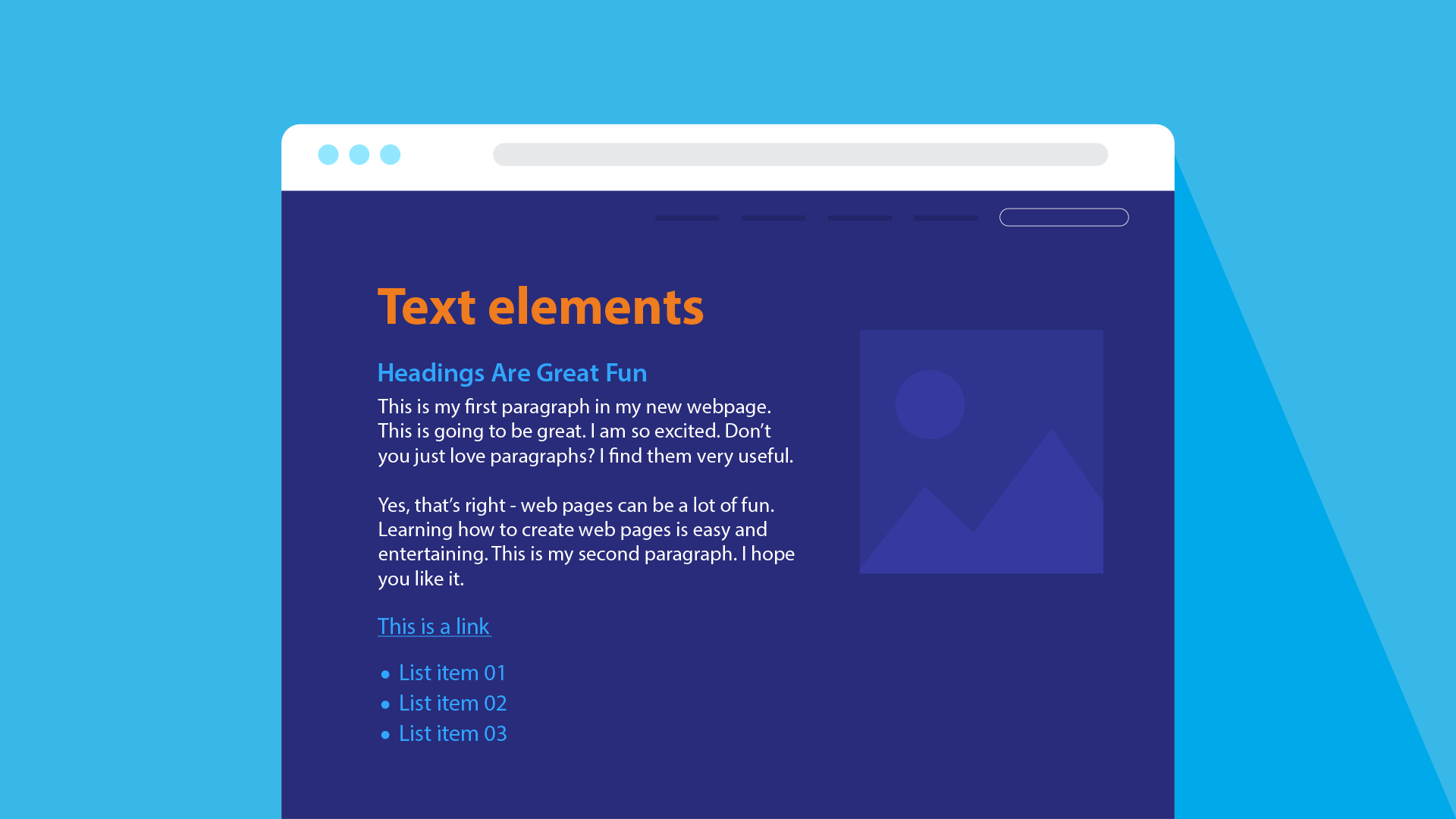
When creating a web page, you add tags (known as markup) to the contents of the page. These tags provide extra meaning and allow browsers to show users the appropriate structure for the page.
- Structural markup: the elements that you can use to describe both headings and paragraphs.
- Semantic markup: which provides extra information; such
as where emphasis is placed in a sentence, that something
you have written is a quotation (and who said it), the
meaning of acronyms, and so on.
[
 ]
]
CSS
CSS allows you to create rules that specify how the content of an element should appear. For example, you can specify that the background of the page is cream, all paragraphs should appear in gray using the Arial typeface, or that all level one headings should be in a blue, italic, Times typeface.
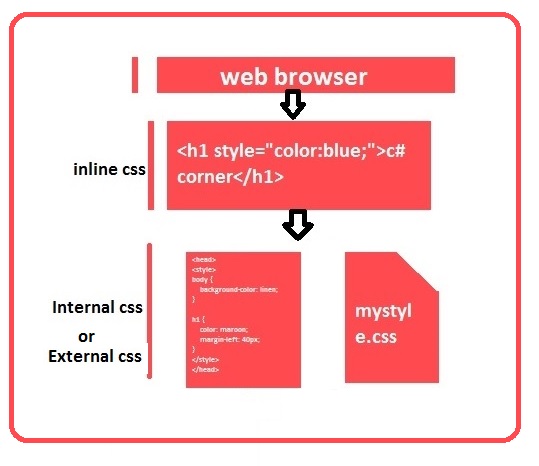
- To link CCS with HTML types:
- Using External CSS
- //<link href=”css/styles.css” type=”text/css”rel=”stylesheet” />
- Using Internal CSS
- //
[ ]
]
JavaScript (JS):
JavaScript is a programming language that adds interactivity to your website. A computer program is a list of “instructions” to be “executed” by a computer.
In a programming language, these programming instructions are called statements.
A JavaScript program is a list of programming statements.
[ ]
]